TL;DR
A temporary wallet — more precisely, a session-scoped ledger — is a shared digital record that exists only for the duration of a specific event (a poker night, a group dinner, a weekend trip) and disappears or zeroes out once everyone settles up. It's the safer, simpler alternative to handing your money to a human banker, pooling cash into one person's Venmo, or setting up a crypto escrow wallet. Party Pot is a temporary wallet in this sense: it tracks everything during the game and produces a minimum-transfer settlement at the end, without ever holding a single dollar of real money.
If you've ever ended a poker night with six people staring at a pile of mixed-denomination cash trying to work out who owes what, you already understand the problem a temporary wallet solves. This post explains what a temporary wallet is, how it differs from a real wallet and from escrow, and why a session-scoped ledger is the best fit for home poker games, group dinners, and any other event where money moves between a small group of people for a short period of time.
What Is a Temporary Wallet?
A temporary wallet is a shared financial record — a ledger, effectively — that exists for the duration of a single event and closes out when the event ends. “Wallet” is the metaphor people reach for because it tracks balances the way a wallet does, but in most cases no real money is ever stored inside it. The balances are numeric. The settlement happens outside.
The defining traits of a temporary wallet:
- Session-scoped. It exists for one poker night, one trip, one dinner — not forever.
- Multi-party. Every participant has their own balance within the wallet.
- Banker-controlled or banker-less. Either one person has write access, or the rules are enforced by the software.
- Produces a settlement at the end. The wallet's entire purpose is to tell you who pays whom when the event ends.
- Closes on settlement. Once everyone has paid, the wallet is zero, and it can be archived or deleted.
Temporary Wallet vs. Real Wallet vs. Escrow vs. Shared Card
The concept sits at the intersection of four related things. Knowing which you actually want is half the battle.
| Category | Holds real money? | Regulated? | Good for home poker? |
|---|---|---|---|
| Real wallet (Venmo, CashApp) | Yes | Yes — money transmitter | No — ToS prohibits gambling |
| Escrow service | Yes | Heavily regulated | Overkill, slow, often illegal for gambling |
| Crypto multi-sig wallet | Yes (crypto) | Varies by jurisdiction | Too technical for most groups |
| Shared virtual card (Cino, etc.) | Yes | Yes — payment network rules | Not built for live betting |
| Human banker pooling cash | Yes (physical) | No | Works but fragile and dispute-prone |
| Session-scoped ledger (Party Pot) | No | No — it's software, not a financial product | Yes — purpose-built |
The critical row is the last one. A session-scoped ledger is the only option in that table that's simultaneously safe, unregulated (because there's nothing to regulate — it's software displaying numbers), and purpose-built for the live flow of a poker game.
The Problem With Real Money in a Home Game
Why not just use real money — Venmo, cash, a bank transfer? Because every real-money option has a problem the moment it touches a poker game:
- Venmo and CashApp. Both explicitly prohibit gambling transactions in their terms of service. Repeated poker-pattern transfers trigger account freezes. Widely reported on poker forums and in app store reviews. Read our full breakdown in Are Digital Poker Wallets Safe & Legal for Home Games?
- Cash at the table. Works — but counting errors, lost bills, and mid-game disputes are constant. Somebody always ends the night $5 short on a 6-player game.
- A human banker holding everyone's money. Whoever volunteers has to physically hold cash for the duration of the session, track each player's running balance on paper or in their head, and settle up from that pile at the end. One mistake creates a dispute; one leaky pocket creates a bigger one.
- Crypto escrow and multi-sig wallets. Technically functional, completely overkill for a Friday night game, and requires every player to have their own wallet set up. The setup friction alone kills this option for 99% of home games.
The Traditional Method: The Banker / Central Hub
The most common non-app approach is what poker forums call the banker method or the central hub method. It works like this:
- One player — usually the host or the biggest winner — becomes the central hub for all settlement
- Every losing player pays the hub their net loss at the end of the night
- Every other winning player collects their net winnings from the hub
- The hub breaks even, and the number of transfers is reduced from N-squared to roughly N
This is the same mathematical principle Party Pot's Smart Settlement uses — but where the central hub method relies on one trusted human to hold everyone's money mid-flow, a temporary wallet removes the trust requirement by logging every transaction digitally. No one has to hold anything; the ledger is the source of truth.
Party Pot as a Temporary Wallet: How It Works
Party Pot is a session-scoped ledger. Every home poker game (or game night, or group dinner) gets its own Party Pot room, which behaves like a temporary wallet for the duration of the session.
1. The room is the wallet
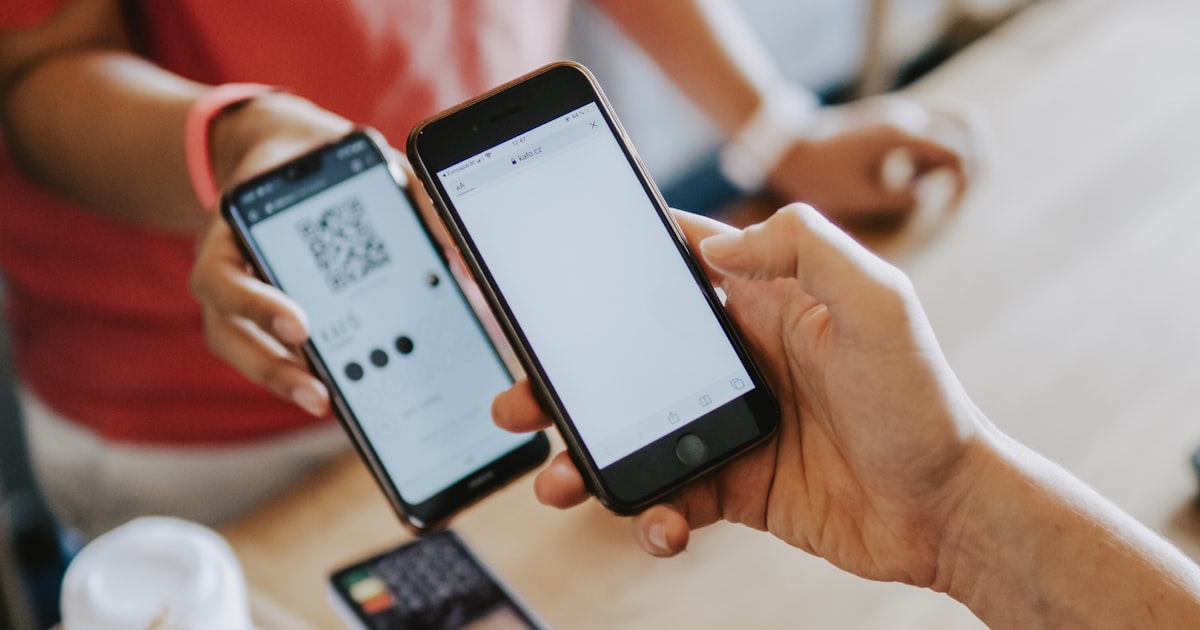
One player (the host) creates a room and sets the starting balance per player equal to the agreed buy-in. Every other player joins by scanning the QR code. Each player now has a balance inside the shared wallet.
2. Transactions move balances, not real money
As the night progresses, bets, pot claims, and rebuys move balances around inside the room. Nothing hits a bank account. No real money is held anywhere. The wallet is a shared scorekeeper.
3. Every player can audit in real time
Because the wallet is visible on every player's phone, nobody has to trust a human banker's memory. Every transaction lands in an immutable log that everyone sees. Disputes are resolved by scrolling the history, not by arguing.
4. Settlement closes the wallet
When the game ends, one tap runs Smart Settlement. The algorithm reads everyone's final balance, computes net positions relative to the total buy-in, and outputs the minimum set of real-world transfers needed to zero the ledger. Read the algorithm deep-dive in Smart Settlement Explained.
5. Players settle however they want
Party Pot tells you what needs to happen. The actual payment rail is each group's choice: cash at the door, a bank transfer, or an IOU for next session. Once everyone confirms settlement, the wallet is effectively closed — balances are archived in the transaction history, and the room can be deleted.
Temporary Wallet vs. Central Hub vs. Crypto Escrow vs. Spreadsheet
| Feature | Human banker | Crypto escrow | Spreadsheet | Session ledger |
|---|---|---|---|---|
| Setup time | Instant | 30+ min per player | 5 min | < 60 sec |
| Requires trust in one person | Yes | No | Yes (whoever has the sheet) | No |
| Holds real money mid-game | Yes | Yes | No | No |
| Per-transaction audit trail | No (memory) | On-chain | Manual | Automatic |
| Minimum-transfer settlement | Manual math | No | Manual formulas | Automatic (Smart Settlement) |
| Works offline during play | Yes | No | Yes | Local-first, syncs on reconnect |
| Cost | Free | Gas fees | Free | Free |
Use Cases Beyond Poker
Session-scoped ledgers aren't just for poker. Any event where a small group needs to track running balances and settle up at the end fits the pattern:
- Group trips. Every expense (gas, hotels, dinners, tolls) gets logged against whoever fronted the cash. At the end of the trip, Smart Settlement tells you who owes whom.
- Shared dinners with a complex bill. Four people splitting an eight-person tab, where different people ordered different amounts and two of them had drinks separately billed. Log each line, tap Settle Up.
- Board game money games. Monopoly, Game of Life, any game where money flows between players. Use Party Pot as the banker to skip physical bills entirely.
- Mahjong and other Asian card games. Payment per hand, mini-settlements after each round, final settlement at the end of the night. Exact same pattern as poker.
- Weekly accountability groups. Anyone who owes the group a forfeit stake gets a balance in the wallet; settlements happen monthly.
How to Settle a Temporary Wallet at the End of a Session
The settlement step is where a temporary wallet earns its keep. Here's the clean sequence with Party Pot:
- Confirm the session is over — no more transactions will land in the wallet.
- Tap Settle Up. Party Pot reads every player's final balance.
- Smart Settlement computes the minimum-transfer list. Example: 6 players with 15 possible pair-wise payments collapses to 3 or 4 transfers.
- Screenshot the settlement screen and drop it into the group chat.
- Each player executes their one or two transfers using whichever payment rail the group prefers: cash, bank transfer, IOU for next session.
- Once everyone confirms, the session is closed. The transaction history is archived (you can pull it up later for record-keeping) and the wallet balances are zero.
Try Party Pot as Your Temporary Wallet
Session-scoped. No real money held. Free to use. iOS and Android.
Related reading: Are Digital Poker Wallets Safe & Legal for Home Games? for the Venmo/CashApp ToS deep dive, How to Play Poker Without Chips for the complete bankroll walkthrough, and Smart Settlement Explained for the algorithm behind minimum-transfer settlement.
One session. One ledger. One tap to settle. ♠️