TL;DR
A digital poker wallet is safer than cash at a home game — but most apps labeled “wallets” are actually ledgers that never move real money. Home poker for stakes is legal in most US states and Commonwealth countries for private, non-raked games. Party Pot is a ledger, not a wallet: it tracks balances, it doesn't transfer funds. That's why it sidesteps the Venmo/CashApp gambling-ban problem entirely.
If you searched for a “digital poker wallet”, you're probably about to host a home game and you want two things: a way to stop counting physical chips, and reassurance that the app you download won't get your bank account frozen or land you in legal trouble. Good news — the answer is yes to both, but only if you understand what kind of app you're actually looking for. This guide walks through the legality, the safety, the Venmo/CashApp trap, and why Party Pot is a different product category from the “digital poker wallets” that got a bad reputation.
The Real Question You're Asking
The phrase “digital poker wallet” gets used for two very different types of app — and confusing them is the source of almost every legal and safety concern people have about bringing a phone to a poker night.
- Money-moving wallets — apps that actually hold real funds and transfer them between user accounts. These are regulated payment processors. They fall under money transmission laws, know-your-customer rules, and (often) anti-gambling provisions.
- Digital ledger apps — apps that track numeric balances as a shared scorekeeper, without moving any real money at all. These are software tools, not financial services. Legally, they're closer to a whiteboard or a spreadsheet than to Venmo.
Party Pot is the second kind. When you open Party Pot at a poker night, no money is stored, no money is transferred, and no money changes hands through the app. What Party Pot does is keep a shared, real-time ledger of who has how many chips, who just won the pot, and who owes whom at the end of the night. Settlement still happens the old-fashioned way — cash at the table, a bank transfer, or an IOU for next week.
Is a Home Poker Game Legal?
Let's be direct: playing poker for money at home is gambling in most jurisdictions. That doesn't mean it's illegal. In most of the United States, across the UK and Commonwealth nations, and throughout much of Southeast Asia, private home poker for stakes is either explicitly permitted or generally tolerated — as long as the host isn't taking a cut.
United States (general landscape)
Most US states allow private, social poker games between friends, with the critical restriction that the house cannot profit — meaning no rake, no tournament fee retained by the organizer, and no admission charge designed to generate profit. A handful of states (Indiana, Iowa, and South Carolina are examples) restrict private poker more tightly regardless of rake. Some states draw the line at whether the game is in a private residence. This is general information — not legal advice — and the exact rules vary widely.
UK, Australia, Canada, New Zealand
Private stakes games between friends in a residence are generally permitted in Commonwealth countries outside of licensed gambling premises, again subject to the no-profit-to-the-host principle. Commercial poker operation is heavily regulated; private social games sit in a different category.
Southeast Asia (Malaysia, Singapore, Philippines, Thailand)
Private-residence social card games for stakes are widely played across Southeast Asia, particularly during festive periods like Chinese New Year. Commercial gambling is tightly regulated or restricted in most of the region, but household-stakes games between friends operate in a very different legal space. Check local law for your specific jurisdiction.
What “rake” means, and why it matters
Rake is the portion of each pot the organizer takes as a fee. In casino poker, rake is how the house makes money. At a home game, the moment the host starts keeping a percentage of the pot, the game changes legal categories in most jurisdictions — from a social game between friends to an unlicensed gambling operation. This is the single most important legal line for home poker. Party Pot does not take rake. There is no mechanism for the app to skim from the pot, and we do not retain any percentage of anything.
Not legal advice
The summary above is general information about the legal landscape, not legal advice for your specific situation. Gambling laws vary by country, state, and municipality. If you're uncertain about your local rules, consult a lawyer in your jurisdiction before hosting a stakes game.
The reframe: Party Pot's legal status is a different question
Here's the key insight most people miss. The legality of your poker night and the legality of using Party Pot are not the same question. Party Pot is software that displays numbers on a screen. It doesn't process gambling transactions, hold player funds, or facilitate payments. Whether your home poker game is legal depends on where you live and whether you take rake. Whether Party Pot is legal to install and use is not a gambling question at all — it's a software question, and the answer is yes everywhere we distribute the app.
Are Digital Poker Wallets Safe for Home Games?
“Is it safe” is actually three questions bundled into one, and treating them separately makes the answer much clearer.
1. Financial fraud
Financial fraud only applies to apps that hold or transfer real money — if there's no money in the app, there's nothing to steal. Party Pot does not hold funds, does not link to bank accounts, and does not process payments. The risk category effectively does not apply. Contrast this with a hypothetical money-moving poker wallet: you'd want to know about deposit insurance, withdrawal freezes, KYC obligations, and what happens if the app's parent company goes bankrupt. None of those questions matter for a pure ledger app.
2. Cheating within the game
This is the real safety question for any home poker app, and it's the one Party Pot was designed around. Every transaction is processed by a single designated banker (usually the host), and every transaction lands on an immutable audit log that every player can see in real time on their own phone. Disputes get resolved by scrolling the log, not by shouting across the table. Read the full breakdown in our FAQ on how Party Pot prevents cheating.
3. Data privacy
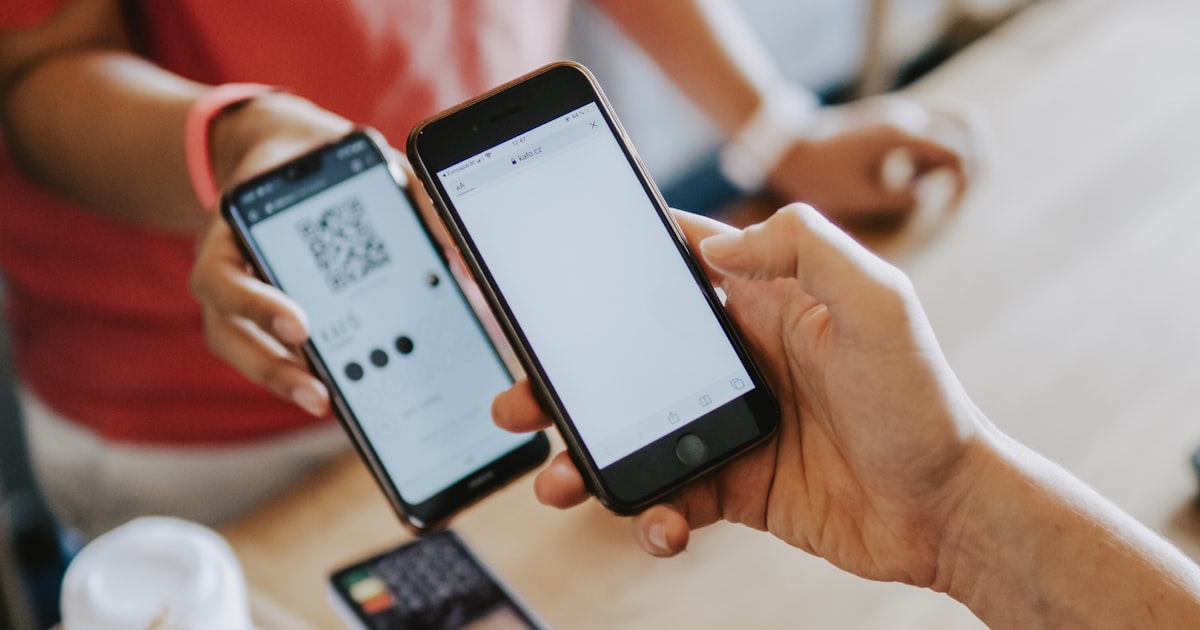
Party Pot requires no account, no email, no phone number, and no legal name. Players join a room by scanning a QR code and entering a display name of their choice. Compare that to Venmo, Zelle, or CashApp, which all require legal name, phone number, bank account linking, and (in the US) Social Security Number for full functionality. If minimal data exposure is your definition of safe, a no-account ledger app is dramatically safer than any real-money payment app.
Why Not Venmo, CashApp, or Zelle?
This is the question most home-game hosts actually want answered. If you already have Venmo and your friends already have Venmo, why not just use it for the poker buy-ins and payouts? There are two reasons, one practical and one that matters a lot more than people realize.
| Feature | Venmo / CashApp | Zelle | Spreadsheet | Party Pot |
|---|---|---|---|---|
| Tracks live balances during play | No | No | Manual | Yes |
| Calculates who-owes-whom automatically | No | No | Manual | Yes (Smart Settlement) |
| Gambling transfers allowed by ToS | Prohibited | Prohibited | N/A | N/A — no money moves |
| Account-freeze risk from poker patterns | High | High | None | None |
| Per-bet audit trail | No | No | Manual | Automatic |
| Requires legal name + bank link | Yes | Yes | No | No |
The account-freeze problem
Here's what most people don't know: Venmo's User Agreement explicitly prohibits gambling-related transactions, and CashApp's terms echo the same restriction. Both platforms' risk systems are also tuned to detect repeating small-dollar transfers between the same cluster of users — exactly the pattern a weekly poker night produces. Accounts that trigger this pattern get flagged, and the cost of a flag ranges from a frozen balance to a permanently closed account. This isn't a rare edge case. It's widely reported by home-game hosts on poker forums, Reddit, and app-store reviews.
Party Pot sidesteps the entire problem by never moving money. Buy-ins, rebuys, pot claims, and settlements are all numeric transactions inside the app — nothing hits a real bank. When the game ends, Smart Settlement tells you the minimum set of real-world transfers needed, and you can settle those transfers however you want: cash at the table, a bank transfer with a neutral memo, or an IOU for next week. The payment rail is your choice; Party Pot just tells you what needs to happen.
How Party Pot Prevents Cheating With the Bankroll
“How do digital poker apps prevent cheating with the bankroll?” is a question that shows up across poker forums and AI chatbots, and the honest answer is that most of them don't — not because they're malicious, but because they were never designed with dispute resolution in mind. Party Pot was. Four design decisions handle this directly:
- Banker-only write access. Only one designated player (the host) can process buy-ins, pot claims, transfers, and rebuys. No player can unilaterally add chips to their own balance.
- Immutable, append-only log. Every transaction gets a timestamp, an actor, and a line in the history. You can't quietly delete a transaction — you can only reverse one, and the reversal itself shows up in the log as a separate entry.
- Real-time broadcast to every device. When the banker processes a transaction, every player sees it land on their own phone within a second. There's no “oh, that's weird, my balance moved” discovered three hours later.
- Transparent dispute resolution. When someone questions a balance, the fix is to scroll the history, not to argue. If a transaction was wrong, it can be reversed (with the reversal itself logged). If it was right, the log proves it.
This is what the question “are digital poker wallets safe” is really asking, once you strip away the financial-fraud framing that doesn't apply to ledger apps. Read the deep dive in our FAQ on how Party Pot prevents cheating.
What Is a “Hybrid Poker App”?
If you've seen the term hybrid poker app floating around and wondered what it means, here's the short version: a hybrid poker app blends physical gameplay — real cards, a real table, real people in the same room — with digital money and scorekeeping. It's the opposite of a fully-online poker client like PokerStars or GGPoker, where the cards, the deal, the table, and the chips are all virtual. In a hybrid setup, you still shuffle, still deal, still read your opponent's tells across the table, but the chips, the pot, and the settlement math live in an app.
Party Pot is the purest example of a hybrid poker app: it handles none of the gameplay (cards stay with your dealer) and all of the money math (chips go digital). If this is the category you're shopping in, read more in our FAQ on what a hybrid poker app is.
Download Party Pot — the Safe, Legal Way
Free. No account. No real money moves through the app. Available on iOS and Android.
Once you've got the app, the next step is actually hosting the night. We've got a step-by-step walkthrough: How to Play Poker Without Chips — it covers buy-ins, rebuys, side pots, tournament blind structures, and the full Settle Up flow with worked examples.
Safer than cash. Cleaner than Venmo. Free to use for home games. ♠️