TL;DR
A social mahjong night typically moves about $5–$20 per player. American (NMJL) tables cap losses with a $3–$10 “pie”; Hong Kong and Singapore style tables agree a small per-fan rate before the first hand — and the right amount to bring is roughly 50–100× your base unit. The stakes are always the table's choice; these are the ranges social players actually use.
From the table
At the family tables we grew up around in Malaysia, the stakes conversation took ten seconds — someone said the rate, someone nodded, tiles started shuffling. The number itself barely mattered; what mattered was that it was said out loud before the first hand. Every money argument we've ever witnessed at a mahjong table traces back to skipping those ten seconds.— PartyPot team
“How much money do you need for mahjong?” is the question every new player is too embarrassed to ask and every host gets asked anyway. The honest answer is that mahjong has no official stakes — every table sets its own — but decades of social play have produced very consistent conventions. This guide covers the typical numbers for American, Hong Kong and Singapore style tables, how to pick a rate your group will still be smiling about at midnight, and how much cash (or balance) to actually bring.
How Much Money Changes Hands on a Mahjong Night?
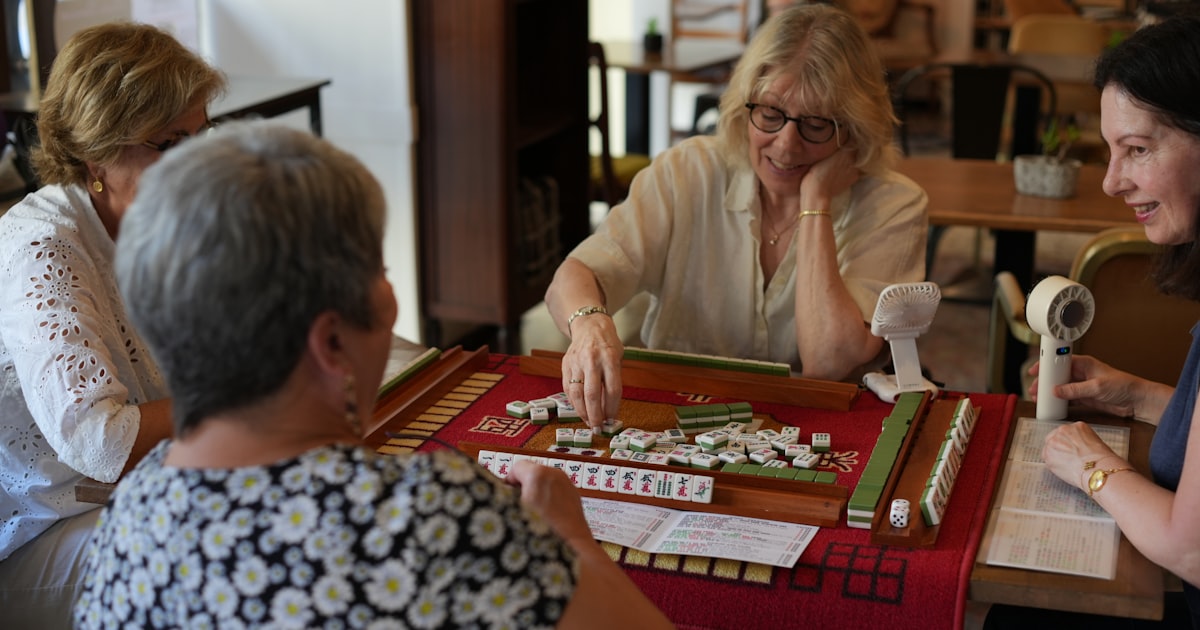
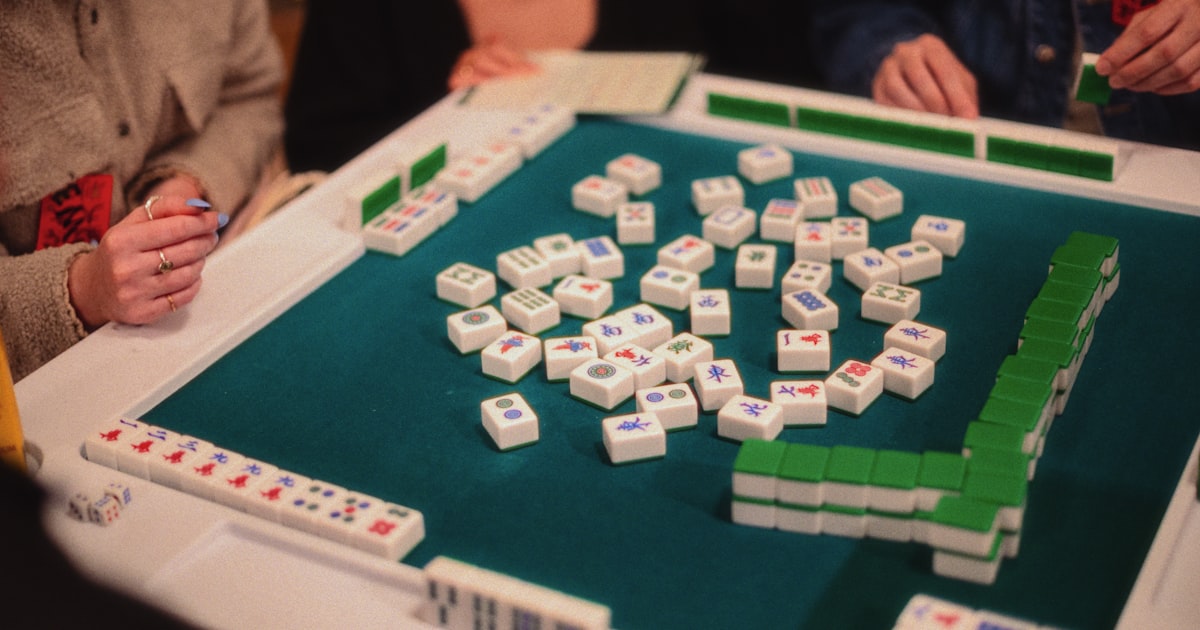
For a typical social table — friends, family, a weekly club — a full evening's swing lands between $5 and $20 per player, win or lose. That figure is widely cited for American kitchen-table games, and it matches what we see at Asian-style social tables playing small per-fan rates. It's enough that winning a big hand feels like something, and small enough that nobody's evening is ruined.
Stakes scale with three dials: the base unit (the value of the smallest payout), the scoring multiplier (how fast a big hand grows — doubling per fan grows much faster than flat per-point), and the number of hands you play (a three-hour session usually runs 12–20 hands). Pick a base unit, run the worst case in your head, and ask: would the table's unluckiest player laugh that number off? If not, halve the base.
American (NMJL) Tables: The Pie Caps Everything
American mahjong has the friendliest money system of all: hands are worth their printed card value in cents (mostly 25¢–50¢), and the “pie” — typically $5, sometimes $3 to $10 — is the most you can lose all session. Once your pie is empty you play on without paying. That single rule is why a $5 bill covers an entire evening of American mahjong. The payout mechanics (discarder pays double, jokerless doubles again) are covered in our dedicated American mahjong money rules guide.
Hong Kong & Singapore Tables: Picking a Per-Fan Rate
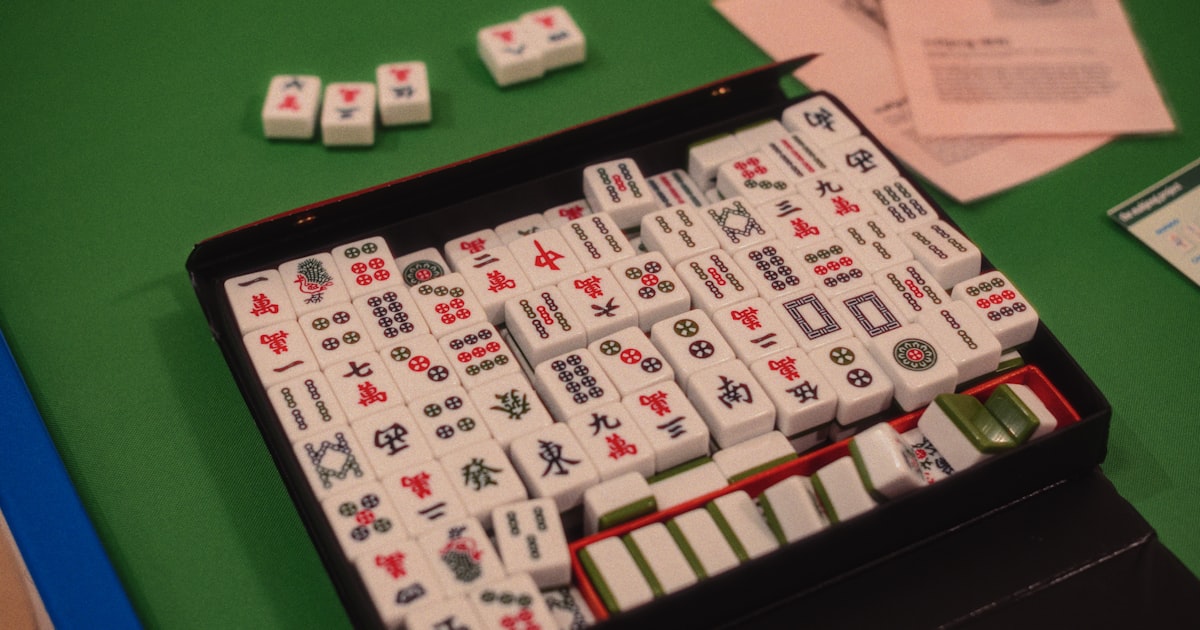
Asian-style tables don't have a printed card — the win's size depends on its fan (Hong Kong) or tai (Singapore/Malaysia) count, and the table converts that count to money with an agreed rate. Most social tables also set a minimum to win (commonly 3 fan) and a cap so a monster hand can't bankrupt anyone. The rate itself is wherever your table is comfortable; here's how three illustrative base units play out on a half-doubling table:
| Base unit (3-fan win) | Mid hand (5 fan) | Capped monster (8+ fan) | Typical night swing |
|---|---|---|---|
| $0.25 | $0.50–$1 | $2 | ±$5–$10 |
| $0.50 | $1–$2 | $4 | ±$10–$20 |
| $1.00 | $2–$4 | $8 | ±$20–$40 |
Remember the payment structure multiplies everything by three on a self-draw: win by discard and (at most tables) the discarder pays; self-draw and all three opponents pay — often at a doubled rate. That's why a night at a “tiny” 50¢ base still swings $20. If fan counting is new to you, start with our beginner's guide to mahjong scoring — agree the conversion table before tiles touch felt.
Riichi Tables: Points First, Money Optional
Japanese riichi runs its whole economy in points — everyone starts at 25,000, and hands move points, not cash. Plenty of riichi clubs (and all sanctioned competition) stop there: final standings are the result. Tables that do convert simply agree a rate per 1,000 points at the start and multiply each player's plus-or-minus by it at the end — we break the conversion down in our riichi points-to-money FAQ. At a dime per 1,000, a heavy four-player session swings a few dollars; it's the gentlest money game of the three styles.
How Much Should You Actually Bring?
- American table: your pie, in quarters. $5 covers the night by definition.
- HK/SG style: a useful rule of thumb is 50–100× the base unit — $25–$50 at a 50¢ base — so a cold streak never turns into an IOU.
- Riichi with conversion: 30–50× the per-1,000 rate comfortably covers even a brutal night.
Three habits keep the money side friendly: say the rate out loud before the first hand, pay as hands finish rather than “settling later,” and keep the stakes at a level every single player — not just the keenest one — can shrug off. Social mahjong is bookkeeping between friends, and it should stay that way; if anyone needs the money back the next morning, the rate is too high.
A Worked Example: Four Players, 50¢ Base, 16 Hands
Here's how a real evening adds up. Aaron, Bee, Cheryl and Daniel play Hong Kong style at a 50¢ base with a 3-fan minimum and an 8-fan cap. Over three hours and 16 hands:
- Aaron wins five hands including one self-draw (everyone pays double on that one): +$11.50
- Bee wins three small hands but feeds two big discards: −$2.00
- Cheryl wins four mid hands, pays her share of the self-draws: +$1.50
- Daniel wins four hands early, then discards into the night's only capped monster: −$11.00
The nets sum to zero — they always must, which is your end-of-night error check. Settling that with cash means digging for exact change three times. Settling it as balances takes three transfers: Daniel pays Aaron $11.00, Bee pays Aaron 50¢, and Bee pays Cheryl $1.50. Done. Notice the headline number: at a “tiny” 50¢ base, the night's biggest swing was eleven dollars — which is exactly why you agree the cap before the first hand, not after the monster lands.
Money Etiquette: Five Habits of Tables That Stay Friendly
- The host says the rate before the first shuffle. New players will never ask; saying it unprompted is the kindest thing a host does all night.
- Pay when the hand ends. “I'll settle at the end” from one player means reconstructing fourteen hands from memory at 11pm.
- No credit at the table. If someone's float runs dry, they play the rest of the night for free — borrow the American pie rule; it works at any table.
- The cap is sacred. No “just this once” when a spectacular hand begs to break it. The cap is what made the stakes feel safe enough to agree to.
- Fix the ending time up front. “Last round at 10:30” protects losing players from chasing and winning players from being guilted into staying. Social mahjong ends on the clock, not on the score.
Skip the Coin Dish: Run the Stakes on a Ledger Instead
Whatever rate your table picks, the failure mode is the same — fourteen hands of small payments reconstructed from memory at 11pm. PartyPot replaces the coin dish with a money-only temporary wallet: set everyone's starting balance, transfer the agreed amount after each hand (the app doesn't score fan or read a card — your table decides the amounts), and end the night with live standings and a one-screen settle-up. Because players set their own values, the same app covers every variant and every rate on this page.
What the money side looks like in PartyPot
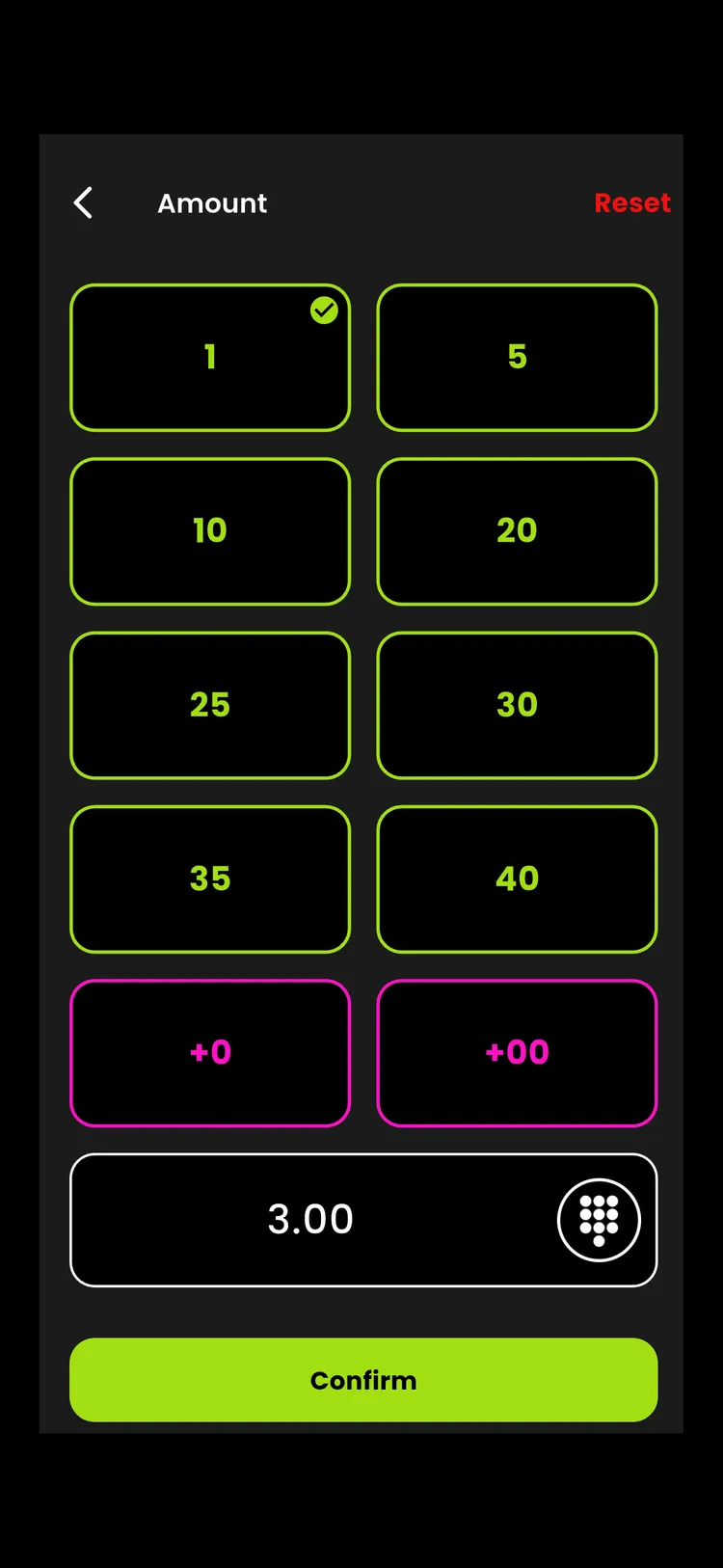
Preset transfer amounts after each hand, a live activity log, and the end-of-session settle-up — the tiles stay on the table, the quarters live on your phone.


Get Party Pot — Set the Rate, Forget the Coins
Free. No ads. No account. Whatever stakes your table plays, Party Pot keeps the balances and settles who pays who at the end.
Related reading: American Mahjong Money Rules for the card-and-pie system in detail; How to Start a Mahjong Club if your table is becoming a weekly thing; and the free mahjong payout calculator for end-of-night settlement math.
Photo by Jason Leung on Unsplash.
Say the rate out loud, then let the tiles do the talking. 🀄