TL;DR
To start a mahjong club you need four decisions, not forty: pick one variant (American, Hong Kong, or Riichi), recruit a committed core of four before advertising wider, buy one correct set for that variant, and fix a recurring time and money rules up front. Clubs die from ambiguity, not from lack of interest.
From the table
The longest-running table we know personally has met nearly every Friday for years. Its secret is almost insultingly boring: same night, same start time, and the money rules were written down once and never argued about again. The tables we've watched fizzle all died the same death — “so… are we playing this week?” texts and a fuzzy memory of who still owed what from last month.— PartyPot team
Mahjong is the most searched-for new club activity in America right now — Yelp logged a 4,467% year-over-year jump in searches for mahjong clubs and named the game a top trend for 2026, while NPR has covered new clubs forming as players look for screen-free, in-person community. The demand is real. What's usually missing is someone willing to be the organizer. If that's going to be you, here is the complete playbook — variant, players, equipment, venue, house rules, money, and how to grow past one table.
Step 1: Pick One Variant Before You Recruit Anyone
Everything downstream — the set you buy, how you teach, how money works — depends on which mahjong you play. Mixed-variant clubs sound inclusive; in practice they mean re-teaching the rules every session. Pick one and commit for the first three months:
| Variant | Best when | Watch out for |
|---|---|---|
| American (NMJL) | Your members are US-based beginners; huge learning ecosystem | Needs a special set (jokers, racks) and the annual card |
| Hong Kong / Singapore | Members grew up with it, or you want the fastest social game | Fan/tai scoring takes a few sessions to internalize |
| Riichi (Japanese) | Your group skews strategy-gamer; strong online practice tools | Steepest rules curve of the three |
If you genuinely can't decide, American is the path of least resistance in the US — that's where the current wave of new players is. (If your table is settling on the NMJL game, our guide to American mahjong money rules covers the payment side.) For the rules differences across variants, see the PartyPot mahjong game guide.
Step 2: Find a Committed Four, Then Grow to Eight
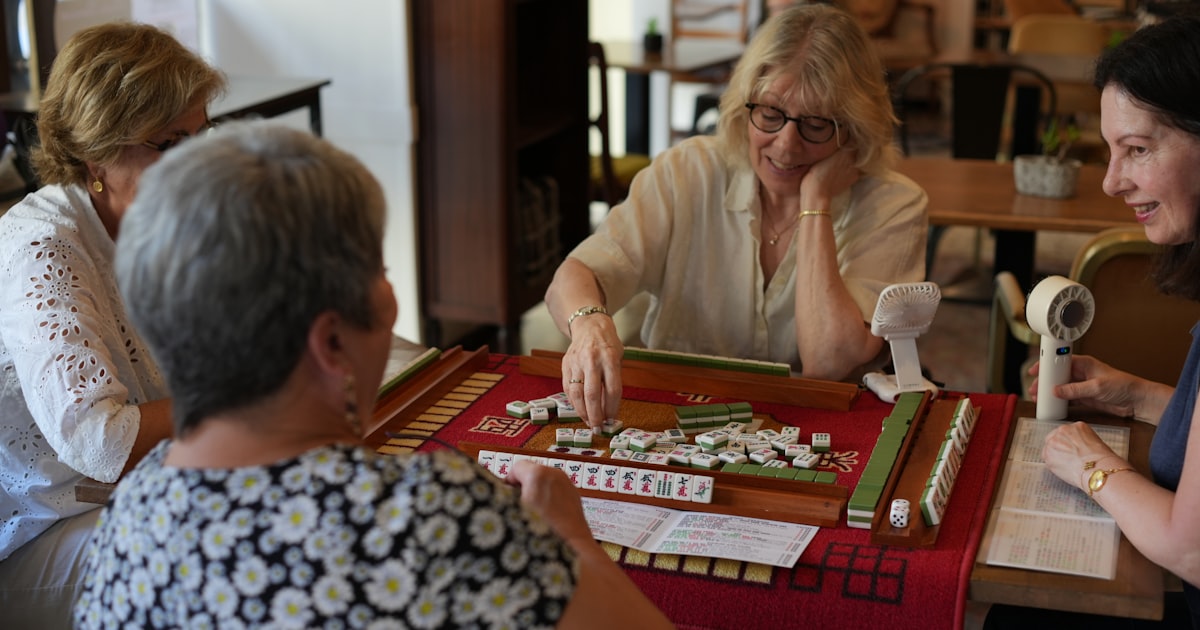
A mahjong club is a table of four with a waiting list. Don't start with a public announcement — start by getting four people who commit to the same recurring slot, because one table that always happens beats three tables that sometimes happen. Recruit in this order:
- Friends and family who already play — even one experienced player halves your teaching load.
- Your own social circle — pitch it as a standing game night, not “learn an ancient tile game.” The hook is the ritual.
- Neighborhood channels — community centers, libraries, church and temple groups, neighborhood apps, a note on the café corkboard. This is where the post-2024 wave of new players is actually looking.
Once the core four is stable, then open the doors. Aim for eight to ten regulars per table you can host: real-life attendance runs 60–70%, so ten interested people reliably fills one table of four and usually a second.
Step 3: Buy the Right Equipment (One Set Is Enough to Start)
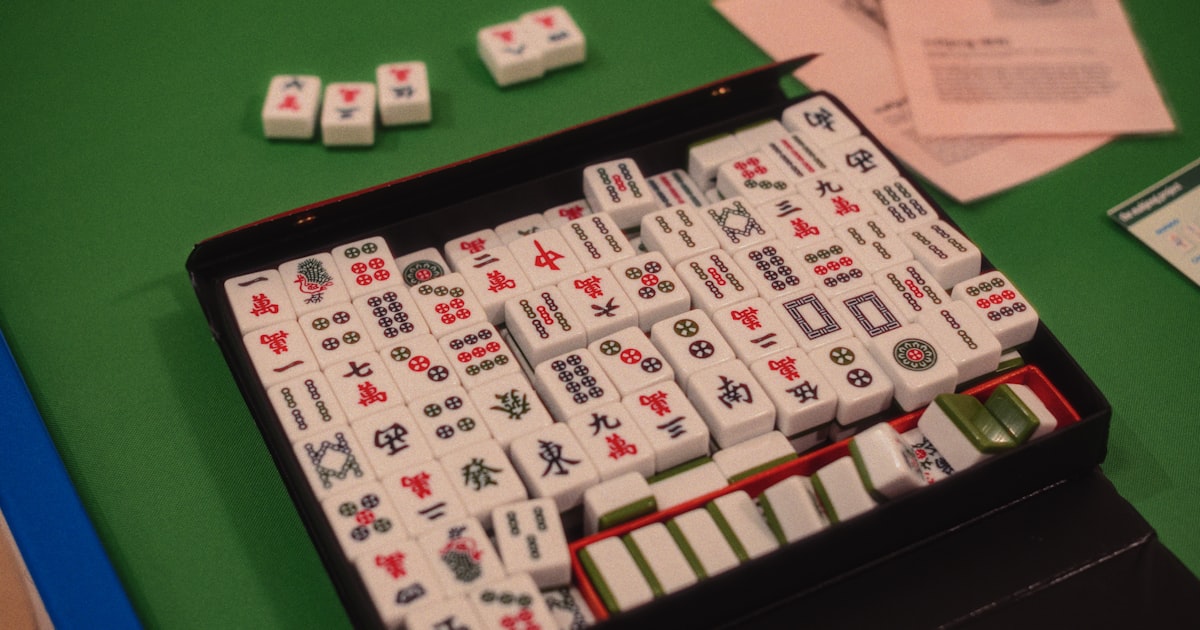
- The set. American mahjong needs a 166-tile set with jokers plus four racks and pushers, and the current NMJL card for each player (a few dollars each, new every year). Hong Kong/Singapore style uses a 144-tile set — no racks needed. Riichi sets swap flowers for red-five tiles and scoring sticks.
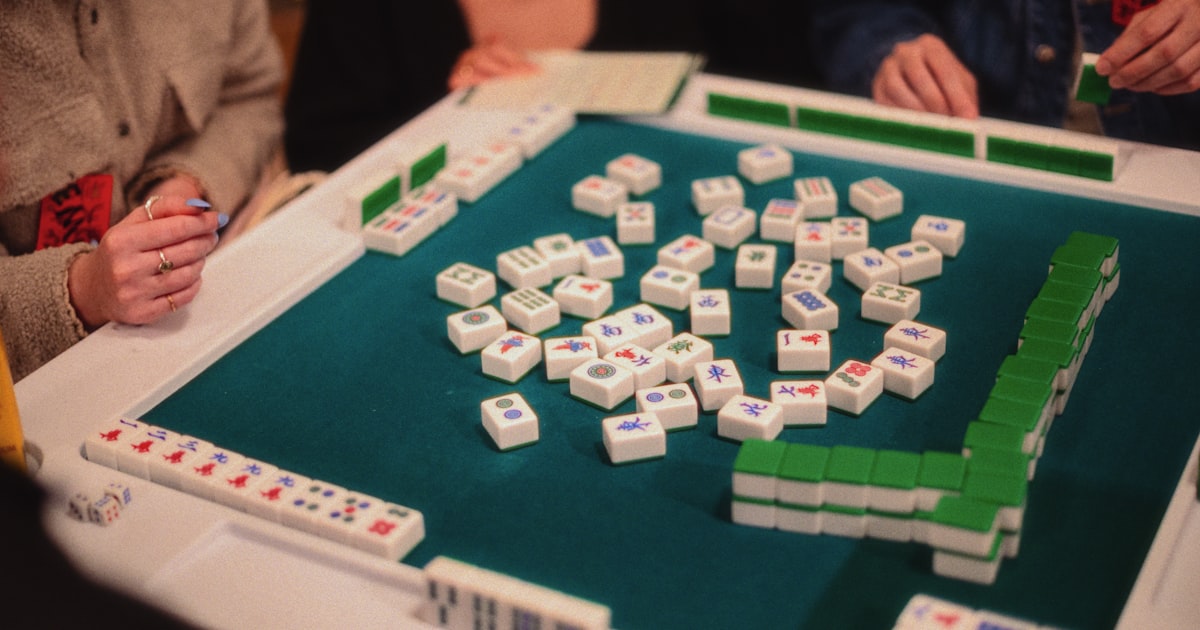
- A surface. Any square-ish table seats four; a cheap non-slip mat quiets the shuffle and saves both the tiles and the friendship with your downstairs neighbor.
- Dice and a wind indicator — included in virtually every set.
- Money handling — quarters and a dish, chips, or an app (more below). Decide before the first money game, not during it.
Total startup cost for a solid beginner setup is usually under $100, and it's the organizer's only real capital outlay. Don't buy a second set until the second table is actually happening.
Step 4: Fix the Cadence and Venue — This Is the Whole Game
Retail analysts have started calling mahjong clubs a new “third place” — the spot that isn't home and isn't work. What makes a third place work is reliability. Same day, same time, every week or every other week. The clubs that thrive remove the scheduling question entirely; people plan around “mahjong Thursday” the way they plan around a gym class.
- Rotating homes — free, comfortable, and the host provides snacks. Works best for a stable core four.
- A café or community room — neutral ground, easier for newcomers to join, and the noise of a shuffle bothers nobody. Many cafés will happily host a quiet weekday-evening regular booking.
- Hybrid — homes for regular weeks, a public venue for “open table” nights when you want new blood.
Keep sessions to a fixed window — say 7:00 to 10:00 — and start the first hand within fifteen minutes of the start time even if you're teaching. Momentum is a feature.
Step 5: Write Down House Rules — Especially the Money Rules
Most mahjong arguments aren't about tiles; they're about table rules nobody agreed on out loud. Settle these once, in writing (a pinned message in the group chat counts):
- Stakes or no stakes? Plenty of clubs play for nothing but pride. If you do play for money, keep it symbolic — American tables typically cap losses with a $3–$10 “pie”; Asian-style tables agree a small per-point rate before the first hand.
- Which scoring quirks apply — minimum fan, dealer repeats, joker rules, whatever your variant leaves open to interpretation.
- How payments happen — per hand or settled at the end, and in what form: coins, chips, or digital balances.
- Latecomer and no-show policy — who sits out, and when a standby gets the seat.
If you settle at the end of the night, do the math with a tool instead of a tired brain — the free mahjong payout calculator takes everyone's net result and returns the shortest list of who pays who.
Step 6: Teach Beginners Without Killing the Night
- First session: open hands, no money. Everyone plays face-up and talks through decisions. One session like this beats an hour of lecturing.
- Print cheat sheets. One page: what makes a legal hand, the turn sequence, and (for American) how to read the card.
- Seat every beginner next to a veteran, not across from one — whispered coaching works sideways.
- Teach the table mechanics early — dealing, walls, and turn order trip up new players more than scoring does. Our mahjong direction guide covers exactly that opening sequence.
Four Mistakes That Kill New Mahjong Clubs
- Going public before the core is stable. An advertised open night where three strangers show up and the organizer's friends don't is how a club ends on week two. Lock the standing four first; open up from strength.
- Stakes creep. Every group has one player who'd happily double the rate, and the social pressure to nod along is real. Make the rate a club setting, not a per-night negotiation: it changes only by unanimous agreement, and never mid-session.
- The single-organizer trap. If one person owns the set, the venue, the teaching and the reminders, the club is one busy month from extinction. Rotate hosting early, and deputize your most patient regular as the second teacher.
- Leaving the rules oral. Any argument that happens twice is an unwritten rule announcing itself. Add one line to the pinned house-rules message and it never comes back.
Running the Club's Money: Where PartyPot Fits
A weekly club has a money problem a casual game doesn't: it repeats. Session after session of small stakes generates a long tail of “I'll get you next week” — and next week, nobody remembers the number. PartyPot handles the in-session side as a money-only temporary wallet: players transfer agreed amounts to each other after each hand, balances update live on every phone, and the session ends with a minimal who-pays-who settlement instead of an IOU pile.
To be clear about the boundaries: the app doesn't score fan or read the NMJL card, doesn't track dealer rotation, and isn't a gambling platform — your table plays the tiles and decides the amounts; PartyPot is the ledger. Because it only moves money, one app covers the American table, the Hong Kong table, and the Riichi table on the same club night. And since every transfer is logged, the treasurer's job — the one nobody wants — quietly stops existing. (Venues and societies running bigger recurring game nights have a dedicated option in PartyPot for Business.)
Get Party Pot — One Less Thing for the Organizer to Carry
Free. No ads. No account. Start your club's first money game with clean balances and end it with a one-screen settle-up.
Related reading: American Mahjong Money Rules for payouts, quarters and the pie; Mahjong Scoring for Beginners for the fan systems used at Asian-style tables; and How to Host the Ultimate Game Night for the food-and-logistics side of hosting.
Photo by Jason Leung on Unsplash.
Four chairs, one set, a standing Thursday — that's a club. 🀄